
02 / Modular battery systems
Modular battery systems.
Hardware and software building blocks for connected BESS applications.
EV to BESS
Built around the real integration challenge.
We connect battery hardware, software interfaces, connectivity and analysis into a practical system concept.
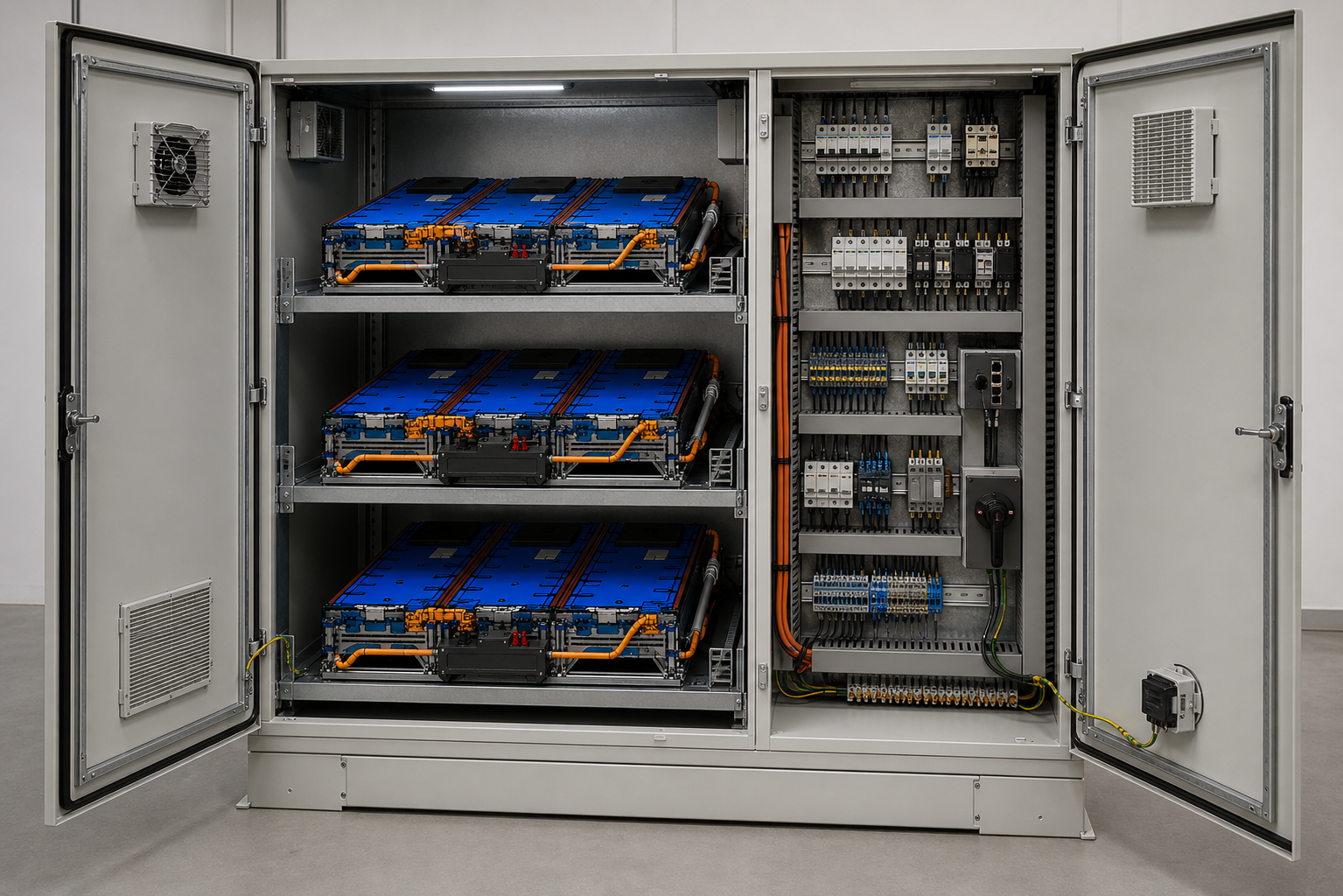
Putting an EV battery into a BESS system is more than mounting a pack in a cabinet. Automotive batteries are designed around a vehicle, its original battery management system, cooling strategy, safety concept and communication architecture. A stationary system needs a different duty cycle, grid interface, protection concept and operating strategy. The customer must bridge mechanical, electrical, thermal and software boundaries while proving that the battery can operate safely and predictably in its new role. Key hurdles include incomplete or proprietary data, cell and module variation, state-of-health uncertainty, isolation and fault handling, CAN or other communication interfaces, inverter compatibility, fire protection and compliance documentation. The system also needs a clear route for commissioning, monitoring, updates and end-of-life decisions. ModuVolt helps customers evaluate available data, define the interfaces and turn suitable EV hardware into a controlled, connected BESS building block.
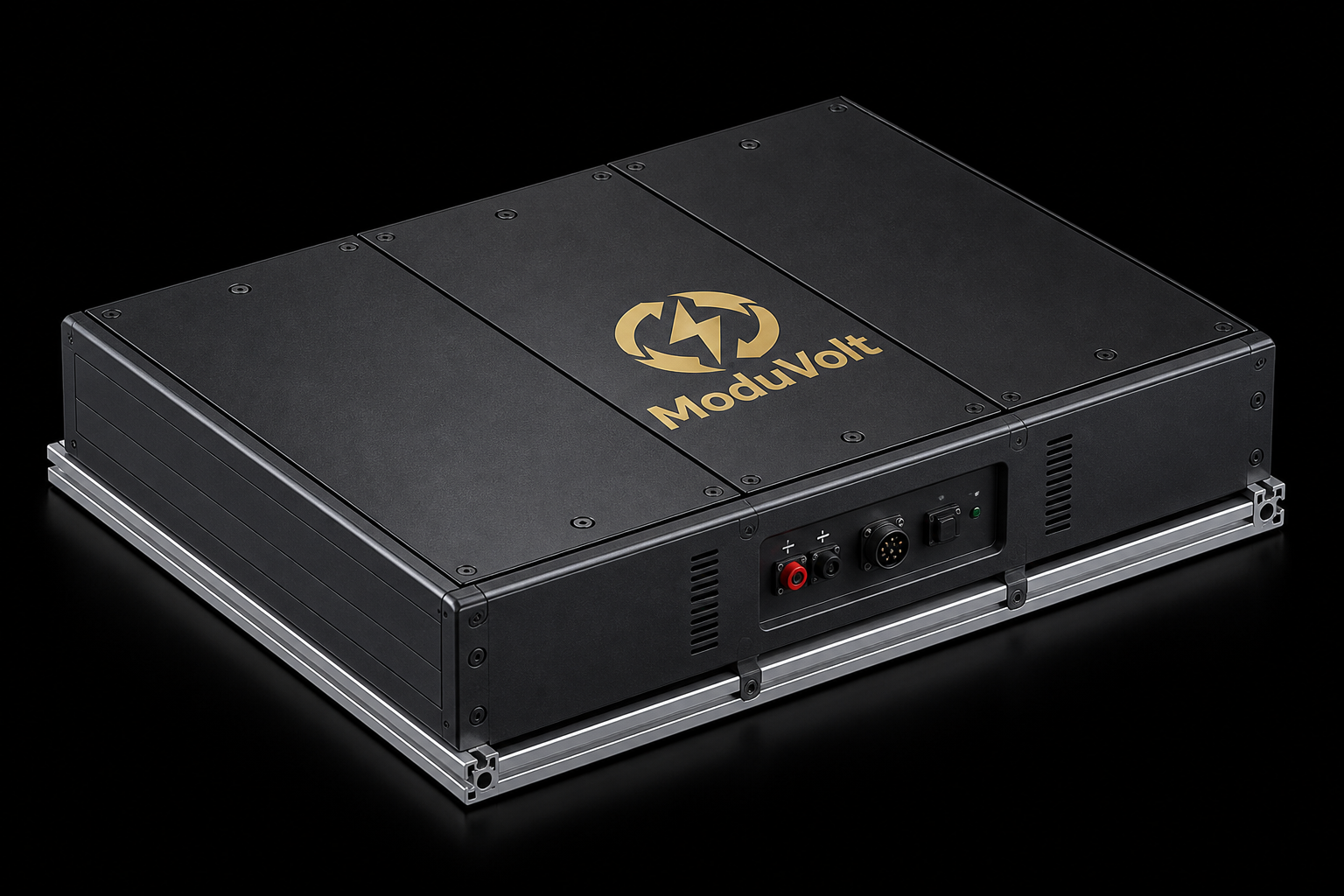
Pack and module solutions
Explore suitable battery formats, racks, pack arrangements, thermal needs and safety interfaces.
Hardware and software interfaces
Define the links between BMS, controls, CAN, inverter, protection and supervisory systems.
Connectivity and analysis
Turn operating data into monitoring, state-of-health insight, alarms and lifecycle decisions.
System integration
Move from feasibility to a documented, testable and maintainable BESS concept.

Connected by data
Connectivity that makes the system useful.
Battery data becomes valuable when it is connected to the operating context. We help define what should be measured, how it should move between the battery, BMS, controls and cloud, and how teams can use it without losing traceability.
Analysis can support commissioning, anomaly detection, state-of-health tracking, performance improvement and the next-life decision.
Applications
Built for different applications.
Build a scalable stationary system from repeatable battery and control units.
Adapt the same system thinking to transportable or temporary power applications.
Translate available automotive hardware into a controlled stationary system concept.
Make it easier to test new battery sources, controls and operating strategies.
Leave room for new functions without locking every future system to one fixed design.
Use relevant operational data to improve engineering and service decisions.
Contact
Have a battery system in mind?
Share the battery source and target application. We can help define the next step.